Craving more space, room for animals, or a quiet workshop with big skies? Acreage in Chino Valley can deliver that freedom at a price that often feels more attainable than nearby mountain towns. Still, rural property brings unique checks you do not face with in‑town lots. In this guide, you will learn the essentials of zoning, wells and septic, utilities, road access, and hazard due diligence so you can buy with confidence. Let’s dive in.
Why Chino Valley acreage appeals
You get four seasons and open views without the extremes of the low desert. Chino Valley sits around 4,400 to 4,700 feet with a semi‑arid climate and roughly 10 to 20 inches of yearly precipitation, which means cooler summers and occasional winter snow compared with Phoenix. The University of Arizona Extension summarizes the region’s soils and climate in its Yavapai County overview. You can review the local climate context in the Extension’s county guide for soils and climate in Yavapai County.
Many buyers here want a small ranchette, hobby farm, or simply more elbow room. Parcels range from 1 acre to large agricultural tracts, and the specific zoning dictates what you can do.
Start with zoning and jurisdiction
First, confirm whether the parcel sits inside the Town of Chino Valley or in unincorporated Yavapai County. That single detail determines which office handles planning, building permits, and inspections.
Next, verify zoning. The Town’s Unified Development Ordinance (UDO) lists agricultural/residential districts like AR‑4, AR‑5, and AR‑36 and single‑family districts like SR‑1 to SR‑2.5. Each zone has precise rules for permitted uses, lot size, setbacks, site coverage, and accessory structures. Always pull the current zoning and read the applicable UDO section before you rely on assumptions. You can access the UDO directly on the Town site: Chino Valley Unified Development Ordinance.
Livestock and accessory buildings
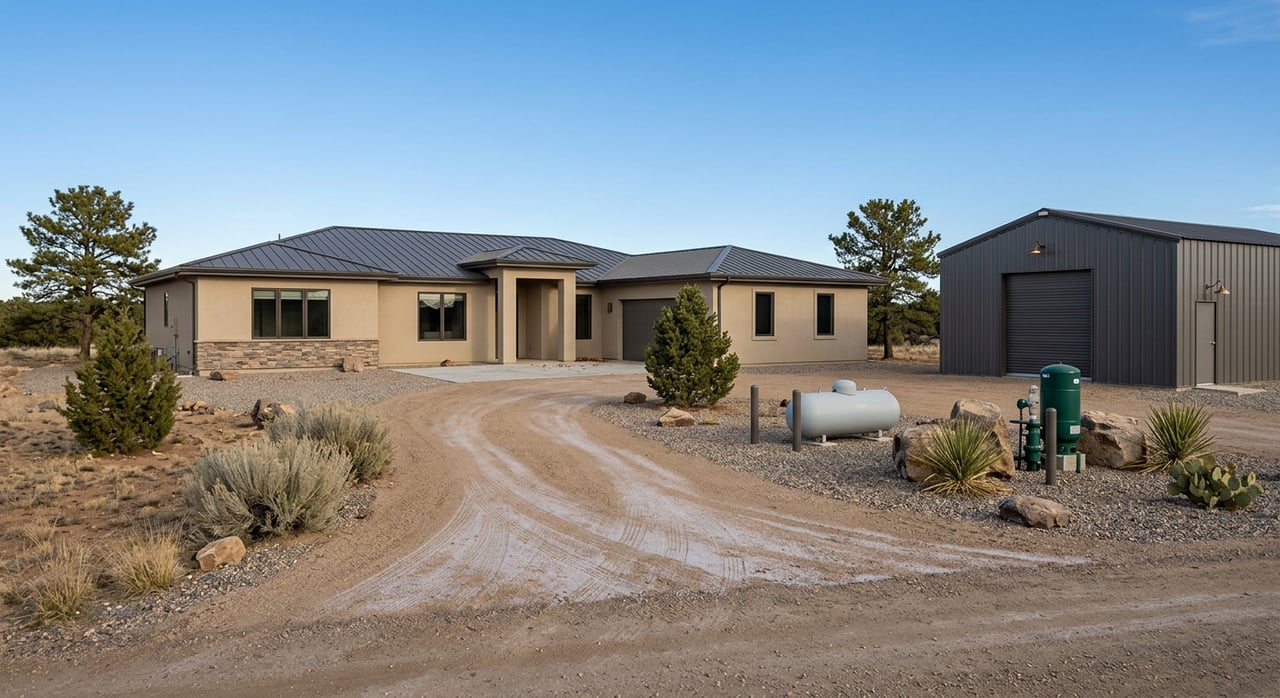
Many agricultural/residential zones allow horses, cattle, barns, corrals, and customary farm uses. That said, “allowed” rarely means “unlimited.” Expect setbacks, height limits, and lot coverage caps for barns and shops, plus possible density limits for specific animals. If you see an unpermitted shop, lean‑to, or storage container, plan to verify whether it meets code or will need permitting.
Water: wells, municipal lines, and quality
Water drives value and livability on acreage. Parts of Chino Valley fall within the Prescott Active Management Area, which monitors long‑term groundwater sustainability. For context on the regional groundwater picture, see the Prescott AMA groundwater conditions from the Arizona Department of Water Resources (ADWR).
Municipal water lines serve select areas inside town, but coverage is limited outside main corridors. Many rural parcels rely on private wells or small private water companies. Always confirm the exact water source for the address and whether any line extension fees were paid.
If there is an existing well
Arizona classifies most domestic wells as “exempt” if the pump is 35 gallons per minute or less. Exempt wells still must be registered. For any property with a well, request:
- The ADWR well registration number and driller’s log.
- The last pump test, including depth to water and sustained yield.
- Recent water‑quality lab results.
ADWR explains well rules and maintains the statewide registry. Learn more in ADWR’s well FAQs and registry information.
If you plan to drill a new well
In Yavapai County, domestic wells commonly range around 100 to 400 feet, but depth and yield vary a lot by location. Rock conditions also affect drilling costs. Use the ADWR registry to review nearby well logs and consult local drillers for estimates. Build contingencies into your budget and timeline.
Water quality and testing
Private well owners often test for naturally occurring elements like arsenic and for microbial safety. Ask for recent results and consider an independent lab test during your inspection period. The University of Arizona Cooperative Extension provides helpful well‑owner education specific to the area. Review their guidance on local well‑owner education and resources.
Wastewater and septic systems
If the home uses septic, request the Yavapai County septic permit, plot plan, and any maintenance records. New or replacement systems require a county permit and a site evaluation. Some sites need engineered or alternative systems if soils are constrained. Find the county’s process and forms here: Yavapai County septic permits and guidance.
Access, roads, and essential utilities
Getting to and from the property safely and maintaining that access matters as much as the home itself.
Road access and maintenance
Not all rural roads are county maintained. Many are private or maintained by a road association or HOA. Confirm whether the approach road is in Yavapai County’s maintained inventory, and ask for any recorded road maintenance agreements. Yavapai County Public Works explains how road maintenance works and how roads can be accepted for maintenance. See Yavapai County road maintenance information.
Driveways and culverts in town
Inside town limits, driveway tie‑ins, culverts, and any work in the public right‑of‑way usually need a Town permit and inspection. Ask the seller for prior permits and approvals. Permit forms and a consolidated fee schedule are posted here: Town of Chino Valley right‑of‑way and driveway permits.
Power, gas, and internet
- Electric: Arizona Public Service (APS) serves the area. Service to a specific parcel can require a line extension at owner cost. Learn more about APS’s regional presence in their company news and resources.
- Natural gas: A local provider has upgraded parts of the system in Chino Valley, but many rural homes use propane. Always ask the utility for a written quote if a gas main extension is needed.
- Broadband: Wired cable or fiber is address‑specific. Some addresses rely on fixed wireless or satellite. Confirm speeds and service reliability before you close and keep a backup plan in mind if you work from home.
Hazards, insurance, and site conditions
Acreage often sits in the wildland‑urban interface. Ask the local fire district about wildfire risk and defensible space recommendations for your address. Insurance carriers may factor clearance, roofing, and access into rates and eligibility.
Flood hazards are mapped by FEMA along washes and arroyos. If a structure lies in a Special Flood Hazard Area, lenders will require flood insurance. The Town can issue a formal flood‑status letter that references the official FEMA panels. Learn how to request a Town flood‑status letter and FEMA panel reference.
Plan your budget
Rural properties can carry different costs than in‑town homes. Build a realistic budget for:
- Well work. Drilling, pump installation, and testing vary with depth and rock conditions. Get multiple bids and use nearby well logs for context.
- Septic repairs or replacement. Site evaluations and engineered systems can add cost.
- Driveways and roads. Private roads may need grading, drainage improvements, or shared maintenance contributions.
- Utility extensions. Electric or gas line extensions and trenching can be significant. Always get written quotes.
- Livestock and structures. Barns, corrals, and perimeter fencing may require new materials and permits to meet code.
Your due diligence checklist
Use this short list to guide your offer and inspection periods:
- Confirm jurisdiction. Is the property inside Town limits or in unincorporated Yavapai County? This sets your permitting path.
- Verify zoning and uses. Pull the parcel’s current zoning in the UDO, then confirm permitted uses, setbacks, and accessory building rules.
- Document the well. If present, get the ADWR registration number, driller’s log, last pump test, and recent water‑quality results. If no well exists, review nearby well logs and talk with a licensed driller about expected depth and yield.
- Check septic. Order the county septic permit, plot plan, and any maintenance records. Schedule an inspection and pump if needed.
- Clarify access. Is the approach road county maintained or private? Get copies of any recorded road maintenance agreements or HOA obligations.
- Inventory utilities. Verify electric, gas, and broadband availability. Ask each provider about line‑extension costs in writing.
- Review title and survey. Order a title report to identify easements and deed restrictions. Consider an ALTA/NSPS survey for boundary clarity.
- Assess hazards. Ask the fire district about defensible space guidance. Request a flood‑status letter if the parcel may touch mapped flood zones.
How Josh Day helps you buy acreage
Buying acreage is part due diligence and part vision. You should feel supported through both. As a local resource serving the Prescott Quad Cities, Josh can:
- Pull zoning details and coordinate answers from Town or County staff.
- Gather well and septic records and connect you with licensed drillers and septic pros.
- Verify road status and help collect any private road agreements.
- Line up local contractors for inspections and written cost estimates.
- Provide relocation support, practical vendor referrals, and neighborhood insight so you land in the right fit.
If you are weighing a parcel in Chino Valley, you do not have to figure it out alone. Reach out to Josh Day to talk through your goals and get a clear, step‑by‑step plan for your acreage search.
FAQs
What should I check first when buying acreage in Chino Valley?
- Start by confirming if the parcel is inside Town limits or in unincorporated Yavapai County, then verify zoning in the Town’s UDO to understand permitted uses and setbacks.
How do Chino Valley wells work and what is an “exempt” well?
- Most domestic wells are “exempt” if the pump is 35 gpm or less and must be registered with ADWR; request the well’s registration number, driller’s log, pump test, and recent water‑quality results.
Are municipal water and sewer available to rural parcels in Chino Valley?
- Municipal water coverage is limited outside main corridors and many acreages use private wells and septic systems, so always verify the exact services for the address and any extension fees.
Who maintains rural roads to my property in Yavapai County?
- Some roads are county maintained, but many are private or maintained by an HOA or road association; confirm maintenance status and request any recorded agreements before you buy.
Do I need a flood or wildfire review for acreage in Chino Valley?
- Yes, ask the Town for a flood‑status letter if a wash is nearby and consult the local fire district for defensible space guidance, since both can affect insurance and safety.