Thinking about trading Phoenix sprawl for open space and cooler air? If you are considering a move to Dewey, you are probably looking for more than a new address. You may want a different pace, a different housing setup, and a daily routine that feels less urban and more grounded. This guide will help you understand how life and housing in Dewey compare with Phoenix so you can decide if the move fits your goals. Let’s dive in.
How Dewey Feels Different From Phoenix
Moving from Phoenix to Dewey is not just a shorter version of moving to another suburb. Dewey-Humboldt sits about 85 miles north of Phoenix and has a much more rural, low-density character. The town was incorporated in part to preserve its open space, scenic views, dark skies, and rural feel.
That matters in day-to-day life. In Phoenix, many people are used to larger commercial corridors, dense neighborhoods, and quick access to services around nearly every corner. In Dewey, the experience is more space-oriented and car-focused, with a setting that feels closer to a rural foothill community.
Climate Changes You Will Notice Fast
Cooler Summers and Colder Nights
One of the biggest lifestyle differences is the weather. Dewey-Humboldt is at about 4,800 feet elevation, while Phoenix Sky Harbor sits at 1,107 feet. That elevation shift brings a milder four-season climate in Dewey, including occasional winter snowfall.
The summer difference is especially noticeable. Phoenix Sky Harbor’s normal July temperatures are 106.5°F for the high and 84.5°F for the low, while Dewey-Humboldt’s July climate table shows a 90°F high and 61°F low. If you are tired of intense overnight heat in Phoenix, Dewey may feel like a real reset.
Winter will also feel different. Phoenix has a January normal of 67.6°F high and 46.0°F low, while Dewey-Humboldt is closer to 52°F high and 27°F low. That means you should expect colder mornings, colder nights, and a true winter season compared with the Valley.
More Seasonal Variety
Phoenix is known for a long hot season and low annual rainfall. Dewey-Humboldt has wetter monsoon months and more winter moisture than Phoenix, according to the town’s climate information. For many buyers, that seasonal variety is part of the appeal.
If you enjoy seeing more change through the year, Dewey offers a different rhythm. You get warm summers, cooler evenings, and a climate that feels less one-note than the desert floor.
Daily Life Is More Rural and Car-First
Expect More Driving
Dewey-Humboldt’s general plan notes that SR 69 and SR 169 connect residents to services, employment, and transportation throughout the county and Arizona. The town is about 15 miles east of Prescott, 12 miles east of Prescott by the town’s about page, and about 18 miles west of Interstate 17. That regional access helps, but it does not create a suburban Phoenix-style convenience pattern.
Data based on the American Community Survey shows a mean commute of 23.5 minutes, with 74% of workers driving alone and 15.3% working from home. The average household has 2 cars. Those numbers support what many relocators quickly notice: Dewey is a car-first place.
If you are thinking about commuting to Phoenix every day, this is important to weigh carefully. At about 85 miles from Phoenix, Dewey is better understood as a lifestyle relocation than a typical metro-area commute move.
Services Are More Spread Out
The town’s planning documents describe very low-density residential areas with large parcels of vacant land and no commercial development in some east and west sections. Public Works says the town maintains about 50 miles of roads, including about 38 paved miles and 12 miles of improved native-surface roads. In practical terms, some routes may feel more rural than what you are used to in Phoenix.
That does not mean Dewey is isolated. It means convenience looks different here. You may drive farther for errands, and your home search may need to account for road type, access, and how often you want to head toward Prescott or other service areas.
Housing in Dewey Looks Different Too
Larger Lots Are Common
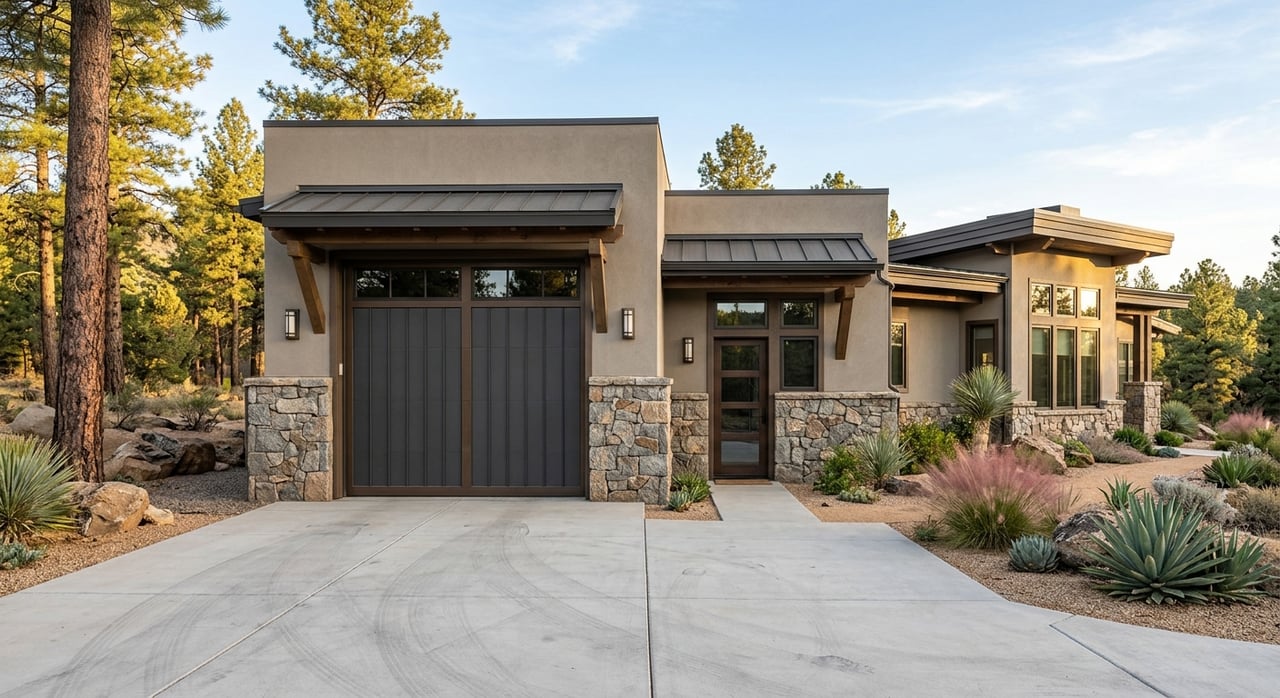
If you are moving from Phoenix, lot size may be one of the most noticeable changes. The town says residential lot sizes are typically greater than one-half acre, and most areas are 1.6 acres or larger. That is a major shift from many Phoenix neighborhoods where homes are built much closer together.
For buyers who want breathing room, privacy, or space for outbuildings and equipment, Dewey can be appealing. The overall housing pattern is built around land, not high-density subdivision living.
The Housing Stock Is More Varied
Dewey-Humboldt’s general plan describes a mix that includes site-built homes and manufactured homes. It also refers to gentleman farms, ranchettes, clustered neighborhoods, and single-family residential areas rather than uniform tract developments. That variety can create more options, but it also means homes and parcels can differ a lot from one property to the next.
If you are used to Phoenix neighborhoods where homes follow similar lot standards and utility setups, Dewey may require a different mindset. You are often evaluating not just the house, but the land, access, and property systems that come with it.
Owner-Occupied Market Context
ACS-based data places the median property value around $426,900, with homeownership at 88.8%. That points to a market with a strong owner-occupied presence. For many buyers, that supports the idea of Dewey as a place people choose for long-term living rather than dense rental turnover.
Utility Due Diligence Matters More
Water Can Vary by Property
One of the biggest differences from Phoenix housing is utility setup. Dewey-Humboldt’s adopted general plan says about 80% of residents rely on private exempt wells. Some residents use private water companies, and some haul water to their properties.
That means water is not something you should assume works the same way from one home to the next. In Dewey, understanding the property’s water source is an important part of the buying process.
Septic Is the Norm
The town has no sewer mains or wastewater treatment plant, so homes use septic systems. The town’s septic page says permits are obtained through Yavapai County Environmental Services, and the county notes that new septic systems may require site inspection and percolation testing. For buyers coming from Phoenix, this is one of the clearest examples of how rural housing requires a little more homework.
That homework is worth doing early. It can help you understand future maintenance, land use possibilities, and whether a parcel fits your plans.
Parcel Details Need Extra Review
Yavapai County zoning guidance says parcel-specific details like lot dimensions, setbacks, lot area per dwelling unit, and building separation should be verified through county GIS tools and zoning staff. In a market like Dewey, those details can affect how you use the property and what changes may be possible later.
This is especially important if you are looking at vacant land, larger parcels, or homes with unique access or utility setups. Compared with many Phoenix subdivisions, parcel-by-parcel review matters more here.
Who Dewey Often Fits Best
Dewey can be a strong match if you want:
- More land and more separation between homes
- Cooler summer temperatures and colder winter nights
- A quieter, rural daily pace
- Access to public lands, open space, and scenic views
- A home search focused on lifestyle rather than urban convenience
Dewey may be less ideal if you want:
- Short daily access to major shopping and services
- A highly walkable environment
- Uniform neighborhood layouts and utility systems
- An easy everyday commute to Phoenix
What to Consider Before You Move
Before you make the jump from Phoenix to Dewey, it helps to think through your daily routine. How often do you need in-town services? How comfortable are you with private wells, septic systems, or native-surface roads? Are you looking for convenience first, or space and privacy first?
These questions can shape the right property choice just as much as price or square footage. In Dewey, the best home for you is often the one that matches both your lifestyle and your comfort level with rural property features.
Why Local Guidance Helps in Dewey
A move like this usually goes more smoothly when you have someone helping you compare properties beyond the photos. In Dewey, buyers often need practical insight into parcel differences, road access, utility setups, and how one area may feel different from another. That kind of local guidance can help you avoid surprises and focus on homes that truly fit your move.
If you are relocating from Phoenix, the goal is not just finding a house. It is finding the right version of Northern Arizona living for your next chapter.
If you are planning a move from Phoenix to Dewey and want local insight on neighborhoods, lot types, and what to look for property by property, reach out to Josh Day for thoughtful, high-touch relocation support.
FAQs
What is the biggest lifestyle change when moving from Phoenix to Dewey?
- The biggest change is usually the shift from a dense urban setting to a low-density, rural environment with more land, more driving, and a slower daily pace.
How does Dewey weather compare with Phoenix weather?
- Dewey is cooler because of its higher elevation, with July averages around 90°F high and 61°F low compared with Phoenix normals of 106.5°F high and 84.5°F low, plus colder winter temperatures and occasional snowfall.
What should Phoenix buyers know about Dewey housing lots?
- Dewey lots are often much larger than typical Phoenix lots, with residential parcels usually greater than one-half acre and many areas at 1.6 acres or more.
What utilities should buyers check when purchasing a home in Dewey?
- Buyers should confirm the water source, septic setup, road access, and parcel-specific zoning details because many properties rely on private wells or hauled water and use septic systems instead of municipal sewer.
Is Dewey a realistic daily commute to Phoenix?
- Because Dewey is about 85 miles north of Phoenix, it is generally better viewed as a lifestyle relocation rather than a typical daily suburban commute option.
What makes Dewey different from a Phoenix suburb?
- Dewey offers a more rural character with open space, dark skies, larger parcels, mixed road surfaces, and a housing pattern that is less uniform than most suburban Phoenix neighborhoods.